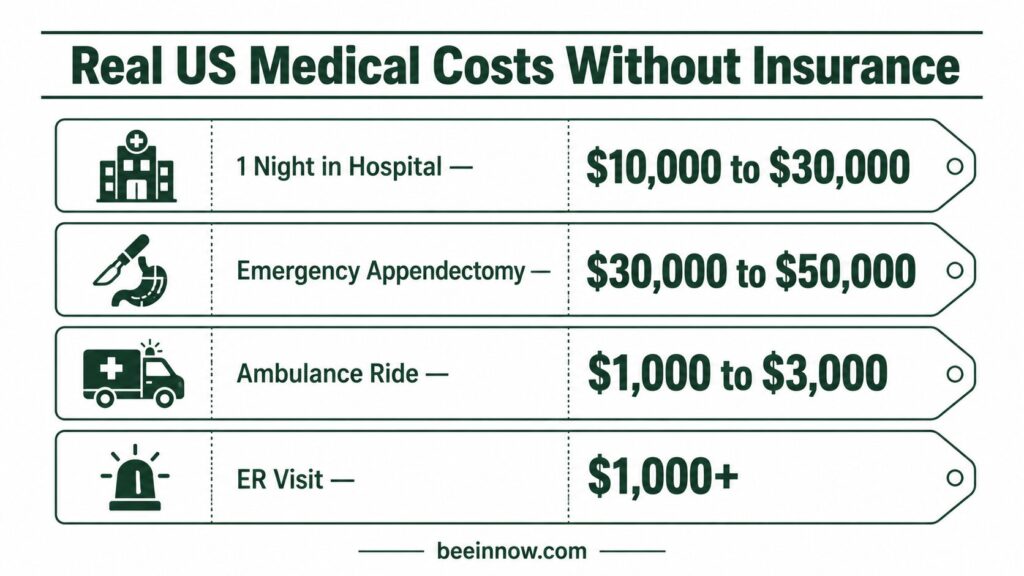
A single night in a US hospital can run $10,000 to $30,000. An emergency appendectomy can generate a bill of $30,000 to $50,000. These aren’t worst-case horror stories — they’re ordinary prices in the American healthcare system, and they’re exactly why health insurance for international students in USA isn’t a box to check during orientation week. It’s a financial requirement that, if you get it wrong, can cost you thousands of dollars you never needed to spend.
Is Health Insurance Actually Mandatory?
Here’s the part that trips up a lot of new students: the US federal government does not require F-1 visa holders to carry health insurance. But nearly every university does, as a condition of enrollment. Skip it, and you may not be allowed to register for classes at all. J-1 exchange visitors have it stricter — federal regulations require J-1 and J-2 dependents to carry insurance covering at least $100,000 per accident or illness, medical evacuation, repatriation benefits, and a deductible no higher than $500, for the entire length of the program. If you’re on an F-1, the specific coverage minimum is set by your university, not the government — which means it varies significantly from school to school.
💡 Pro Tip: Before assuming your home country’s travel insurance is enough, check whether it’s “ACA-compliant” — most universities require plans to meet Affordable Care Act standards, and a basic travel policy usually doesn’t qualify.
How Much Does Health Insurance for International Students in USA Actually Cost?
University-sponsored plans typically run $1,200 to $4,000 a year, though the exact number depends heavily on the school. Adelphi University, for example, billed its student insurance at $2,186 for the 2026-27 academic year. These university plans are often billed automatically alongside tuition the moment you register — a setup sometimes called a “Mandatory Group Health Insurance Plan” — so the charge can show up on your bill before you’ve made any active choice about it. Private international student plans can run cheaper, sometimes advertised as low as around $2 a day, but the coverage details matter more than the headline price: check the policy maximum, deductible, and specific exclusions like dental, vision, and pre-existing conditions before assuming a cheaper plan is actually comparable.
The Waiver Process Almost Nobody Explains Clearly
If you already have insurance that meets your university’s standards — through a parent’s employer, a private international plan, or coverage from home — most schools let you waive out of their mandatory plan and avoid paying for it twice. This is genuinely one of the most underused ways to reduce cost with health insurance for international students in USA, and it’s also where a lot of students lose money unnecessarily.
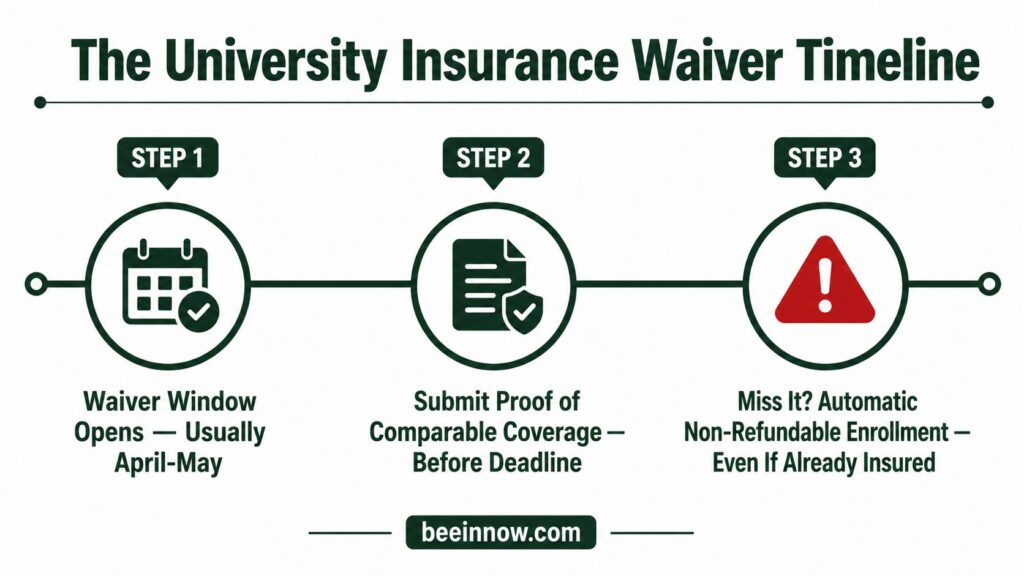
The catch is timing. Waiver windows typically open a few months before the semester starts and close on a hard deadline — often falling between early August and mid-September for fall enrollment, depending on the university. Miss it, and you’re automatically enrolled in the university’s plan and billed for the premium, with no refund, even if you can prove you already had valid coverage the whole time. UMBC’s own waiver policy spells this out clearly: waivers submitted after the deadline simply aren’t considered, and fees aren’t refunded.
⚠️ Warning: Waivers get rejected too, not just missed. The most common reasons are uploading documents at the last minute, a policy that doesn’t match the university’s specific definition of “comparable coverage,” or a deductible that exceeds their limit. Submit early enough that you have time to fix a rejection before the deadline, not after it.
| Visa Type | Insurance Requirement | Set By |
|---|---|---|
| F-1 (Student) | Not federally mandated, but required by nearly all universities | Individual university policy |
| J-1 (Exchange Visitor) | Federally mandated: min. $100,000/accident or illness, evacuation & repatriation coverage, max $500 deductible | US Department of State |
| J-2 (Dependent) | Same federal minimum as J-1 | US Department of State |
What Actually Gets Covered?
Coverage varies by plan, but most university and approved private plans include doctor visits, hospitalization, prescription drugs, mental health services, and emergency care, often with a copay in the $30-$45 range for a student health center visit. Preventive care and annual check-ups aren’t automatically included in every plan — some require opting into that coverage separately, so don’t assume a routine physical is free just because you’re insured. Pre-existing conditions are frequently covered only after a waiting period, commonly around six months, which matters if you’re managing an ongoing health condition when you first arrive.
What Happens to Your Coverage After You Graduate?
University-sponsored insurance plans typically end 30 to 60 days after your graduation date or the end of your final semester — not immediately, but not indefinitely either. If you move onto OPT, you’ll need to transition to employer-provided insurance once you’re working, or purchase an individual plan to cover the gap. Some universities offer a short-term extension specifically for recent graduates bridging that window. Whatever you do, don’t let coverage lapse even for a few weeks — a single uninsured medical event during that transition can undo years of careful budgeting.
Frequently Asked Questions
Is health insurance mandatory for international students in the USA?
The federal government doesn’t require it for F-1 visa holders, but almost every university makes it a condition of enrollment, and J-1 visa holders face a specific federal insurance mandate.
How much does health insurance for international students in USA cost?
University-sponsored plans generally run $1,200 to $4,000 a year, while private plans can sometimes be cheaper — but always compare coverage limits and exclusions, not just price.
Can international students waive their university’s health insurance plan?
Yes, if they can show proof of comparable coverage before the university’s specific waiver deadline, which typically falls in August or September for the fall term.
What happens if I miss the insurance waiver deadline?
You’ll be automatically enrolled in the university plan and billed for the full premium, with no refund, even if you already had valid insurance the entire time.
Does student health insurance cover pre-existing conditions?
Often yes, but typically only after a waiting period, commonly around six months from the policy start date.
Final Thoughts
Getting health insurance for international students in USA right comes down to two things: understanding that it’s functionally mandatory even without a federal requirement, and not missing the waiver deadline if you already have coverage that qualifies. Mark that date the moment you get it from your university’s health services office, and treat it with the same urgency as a visa deadline — because financially, for a lot of students, it ends up mattering just as much.
Related reading: Check out our guides on Student Life in USA and Cost of Studying in USA for more on planning your budget.